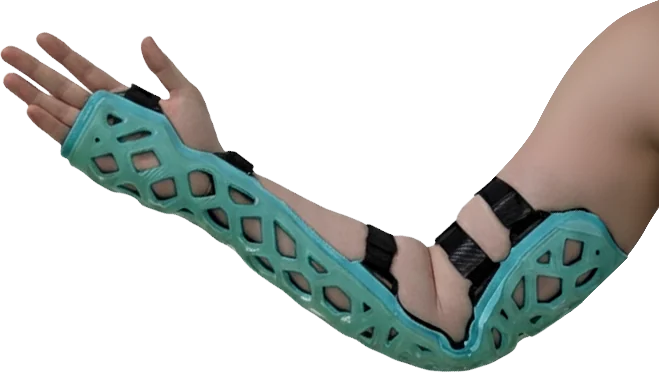
A non-circumferential splint: both edges close on hook-and-loop straps, so it leaves part of the limb open for swelling, skin inspection and care. Soft and mouldable on the limb, rigid in minutes under the UV-free RizyCure light.
Intended uses
- Injuries of the distal upper arm, elbow and proximal forearm
- Fractures, sprains, strains, joint and soft-tissue injuries
- Acute injury, as a bridge to definitive casting, bracing or surgery
- Short-term protection and support after surgery
- Stable or minor injuries, and step-down support, where a removable splint is appropriate
Contraindications and caution
- Contraindicated in known allergy or hypersensitivity to nitrile rubber
- Rule out open wounds the splint would interfere with, and document anything affecting skin sensitivity or sensation
- Position the limb as clinical judgement requires before curing — the shape cannot be adjusted afterwards
- Single patient, multiple use within one course of treatment
- Applied, adjusted and cured by a healthcare professional
Size chart — FlexiSplint® Long Arm Splint
In centimetres. One measurement selects the size; the straps and the flexible material do the rest. When in doubt, take the larger size.
| Size | Elbow tip to palmar crease (cm) |
|---|---|
| S | 30.0–32.9 |
| M | 33.0–35.4 |
| L | 35.5–38.0 |
Wrap it. Strap it. Cure it.
1 · Wrap
Measure, select the size, and lay the splint along the limb so the midline and the anchor loop sit on the landmarks in the instructions for use. The finger flap may run longer or shorter than the fingers — the sizes are built with that margin.
2 · Strap
Secure the anchor loop first, then the remaining loops in order. Check the fit is in the midline and that the free digits move without pressure or restriction.
3 · Cure
Position the limb as clinical judgement requires, then cure with the UV-free RizyCure light, starting at the region that needs to be held first.
Positions, landmarks and curing sequence differ by variant. The instructions for use are the authority — the summary above is orientation, not a substitute.
Instructions for patients — recommended
- Bathe daily with soap and water if the treating clinician permits
- Wash the splint regularly with soap and water, then dry with unheated air
- Rinse with tap water after mud, sand, saltwater or pool water
- Elevate the limb when resting, and use a sling if advised, to limit swelling
Tell the clinician straight away
- Increasing or severe pain, swelling or tightness
- Numbness, tingling, loss of sensation, or pale, bluish or cold digits
- Persistent redness, skin breakdown, blisters or ulceration
- Foul or unusual odour, discharge, or persistent wetness
- Do not remove the outer or inner soft layers, or any foam padding
Other products
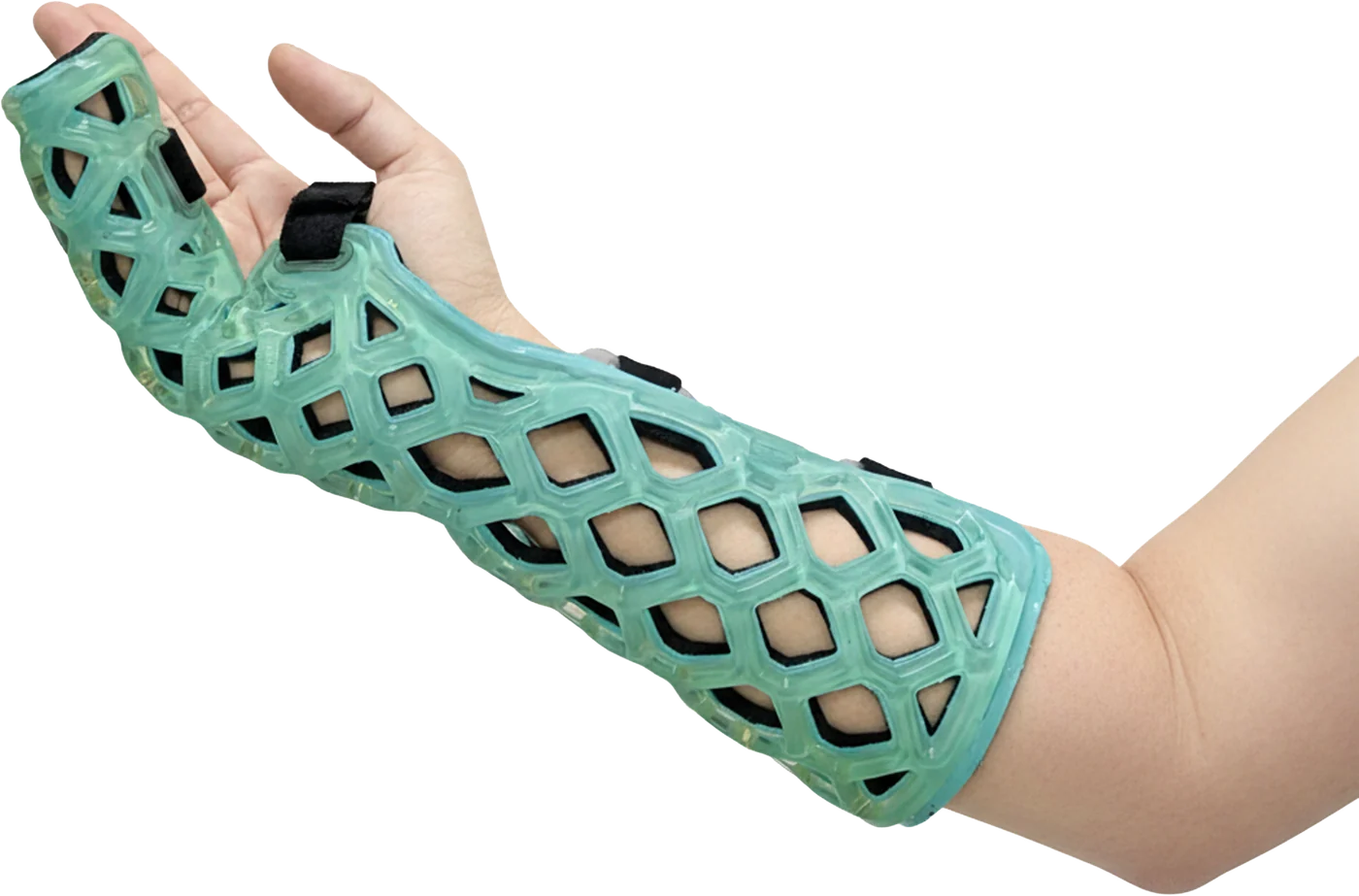
FlexiSplint Ulnar Gutter Splint
Ring and little fingers, 4th and 5th metacarpals — removable, open to swelling.
Product details →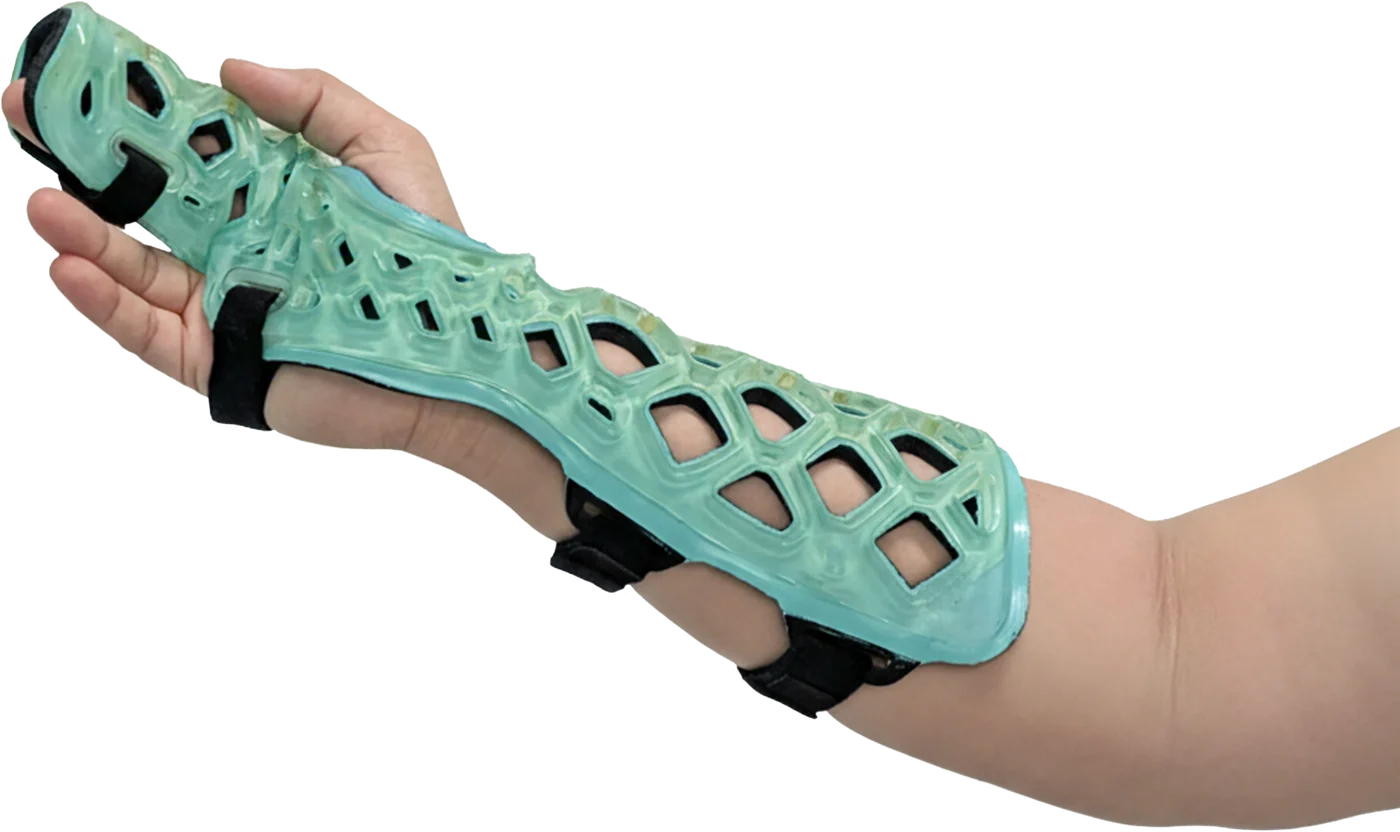
FlexiSplint Radial Gutter Splint
Index and middle fingers, 2nd and 3rd metacarpals — removable, open to swelling.
Product details →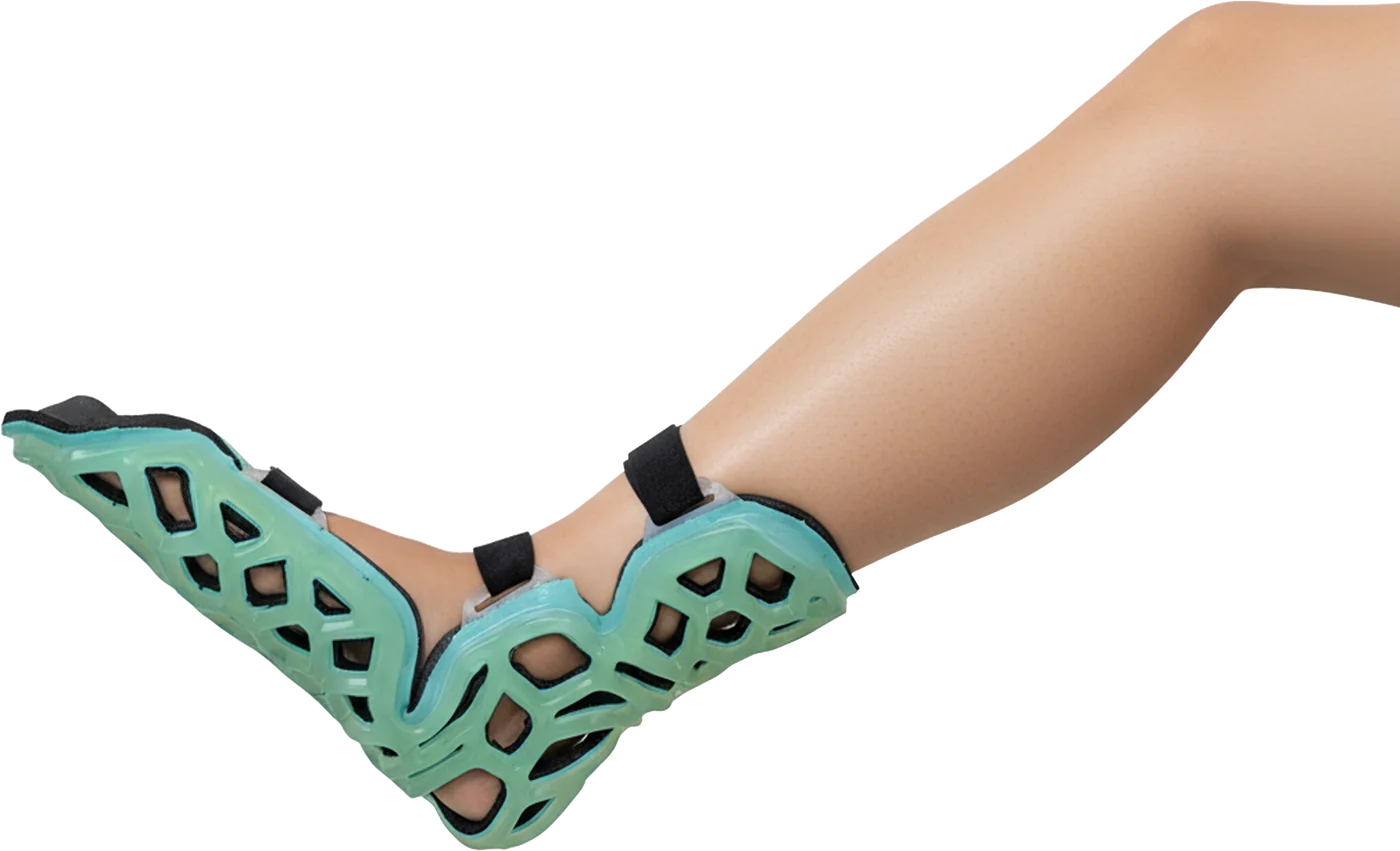
FlexiSplint Foot & Ankle Splint
Foot and ankle — acute injury and post-operative immobilisation.
Product details →Request a demo of the FlexiSplint Long Arm Splint
We bring sample units and a RizyCure light to your cast table.